
Criminal Cases in the Jeff Davis County Courts
Jeff Davis County criminal cases are divided by charge grade. The 394th Judicial District Court hears felony matters. The constitutional County Court handles Class A and Class B misdemeanors, while the countywide Justice of the Peace hears Class C and fine-only matters within its authority. This split matters because a name or cause number sent to the wrong office can delay a search. The combined District and County Clerk keeps the official district and county case files at 111 North Front Street in Fort Davis. The JP keeps its own limited-jurisdiction record at the courthouse.
The file is not an arrest report. It is the court record of the prosecution: the complaint, information or indictment, pleas, motions, settings, orders, judgment and sentence. An allegation may begin at booking, change when a prosecutor screens it, and change again by plea or judgment. For the arrest and custody side of that event, the separate Jeff Davis County arrest history resource explains the sheriff and VINELink channels.
Jeff Davis County Criminal Court Map
The local map is compact, but the offices are not all in one building. The historic courthouse at 100 Court Avenue hosts proceedings, the County Court, and the second-floor JP. The combined clerk's public records counter is at 111 North Front Street. District Court administration is based in Alpine, and the regional district attorney is based in Fort Stockton. Even so, Jeff Davis County felony files remain with the local combined clerk.
| Court or office | Criminal role | Record channel |
|---|---|---|
| 394th District Court | Felony trial cases | Combined clerk; selected dated dockets |
| Jeff Davis County Court | Class A and B misdemeanors | Combined clerk; selected docket PDFs |
| Countywide Justice Court | Class C and fine-only matters | JP by phone or at the second-floor counter |
| Eighth Court of Appeals | Appeals after local judgment | State appellate record search |
The official District Clerk page shows the local counter and contact channel.
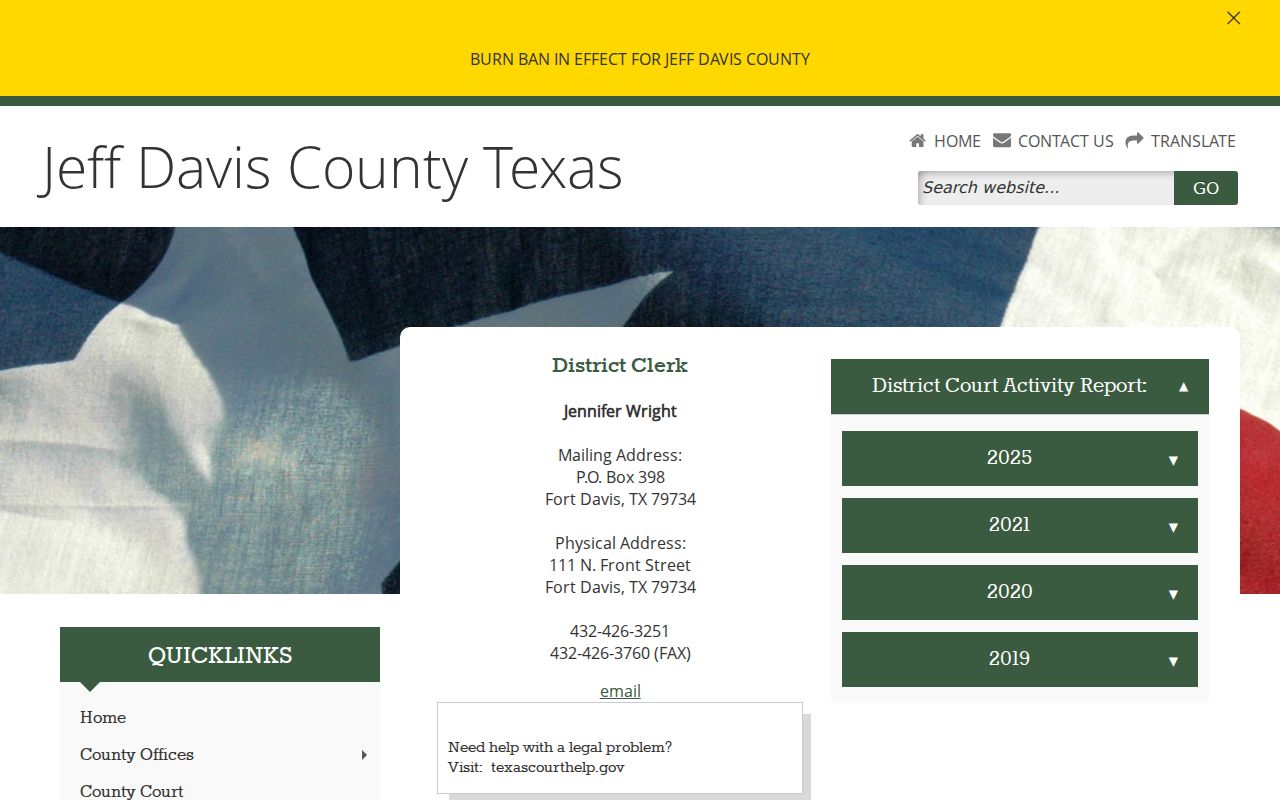
This clerk page identifies the office that can locate the complete felony case file when a public search result is missing.
How to Search Case Records
Start locally because Texas has no single complete person search for every trial-court case. A cause number is the strongest key. A full legal name and an approximate filing or arrest date can help when no cause number is known. The clerk can confirm the court, whether a file is public, the page count, copy or certification price, payment method, delivery options, and any archive delay. No Jeff Davis County criminal copy fee or search fee is posted, so ask for the current amount rather than assuming access is free.
- Decide whether the matter is likely a felony, Class A or B misdemeanor, or a Class C and fine-only case.
- Call the combined clerk at 432-426-3251 for district or county cases. Supply the cause number, full legal name, and approximate filing date.
- Check the official District Court or County Court page for a dated docket PDF, using it only as a hearing lead.
- Try re:SearchTX by person, cause number, county, case type, or date, but treat a blank result as inconclusive.
- Inspect the public file at 111 North Front Street or ask the clerk what mail or fax copy process is currently accepted. Request a certified disposition when proof of the outcome is needed.
For copies without a counter visit, ask the combined clerk about mail to P.O. Box 398, Fort Davis, TX 79734, or fax to 432-426-3760. Confirm that the office accepts the chosen route, the current fee, payment method, certification method, and delivery terms before sending a request.
For a JP citation or warrant-linked matter, call 432-426-3045 during the posted weekday hours of 9:00 a.m. to noon and 1:00 to 4:00 p.m. The JP states that it accepts nothing in electronic form, so its online payment link is not an electronic filing or case-search portal.
Jeff Davis County Criminal Docket PDFs
The county publishes selected dated calendars instead of a full anonymous criminal database. The County Court archive includes criminal docket PDFs, and the District Court page posts selected settings. A calendar can disclose the court, session date, cause number, scheduled matter, party, or charge fields. It does not reliably provide every filing, the full ledger, sentence terms, attachments, or the final signed disposition. Older and unposted settings still require a clerk inquiry.
The Jeff Davis County Court page is the official source for its dated misdemeanor dockets.
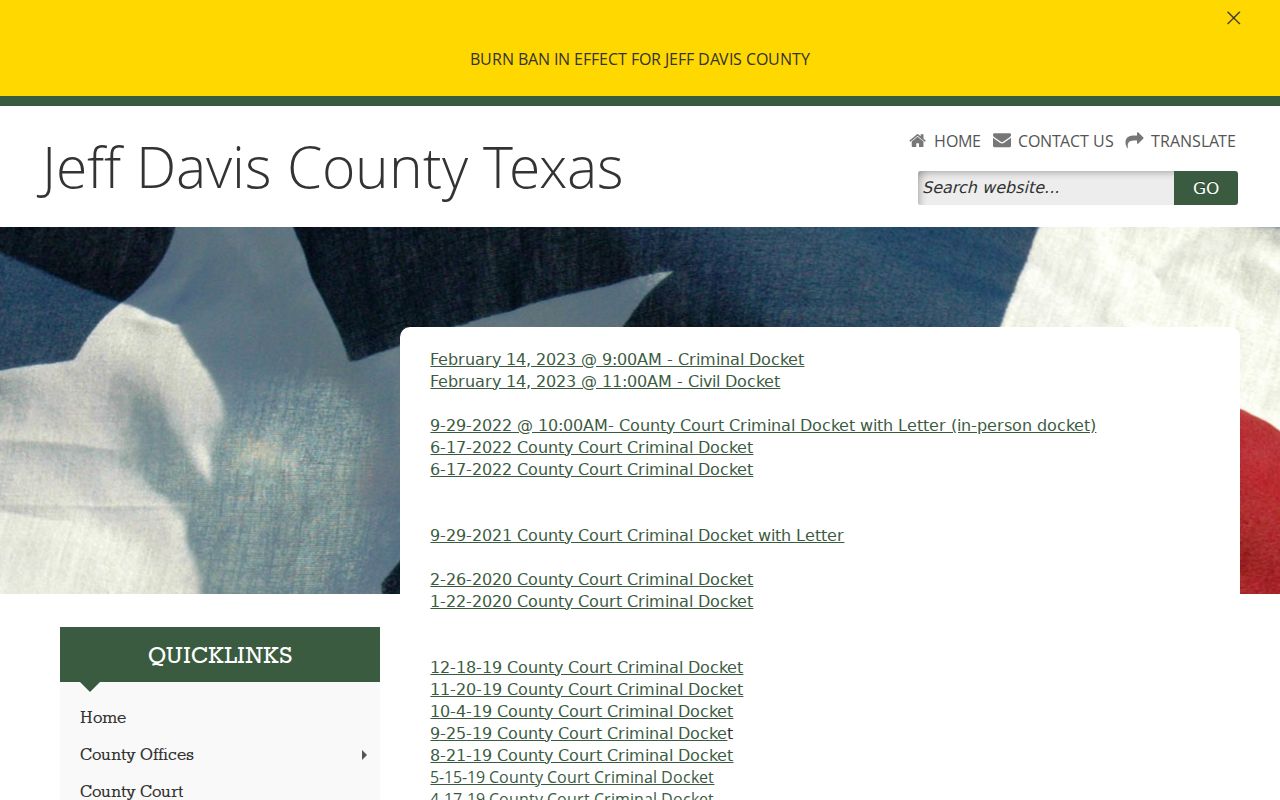
The archive is useful for finding a setting, but a signed judgment or clerk-certified disposition is the sound source for the result.
The official County Clerk page also identifies the combined clerk and provides county-court activity links.
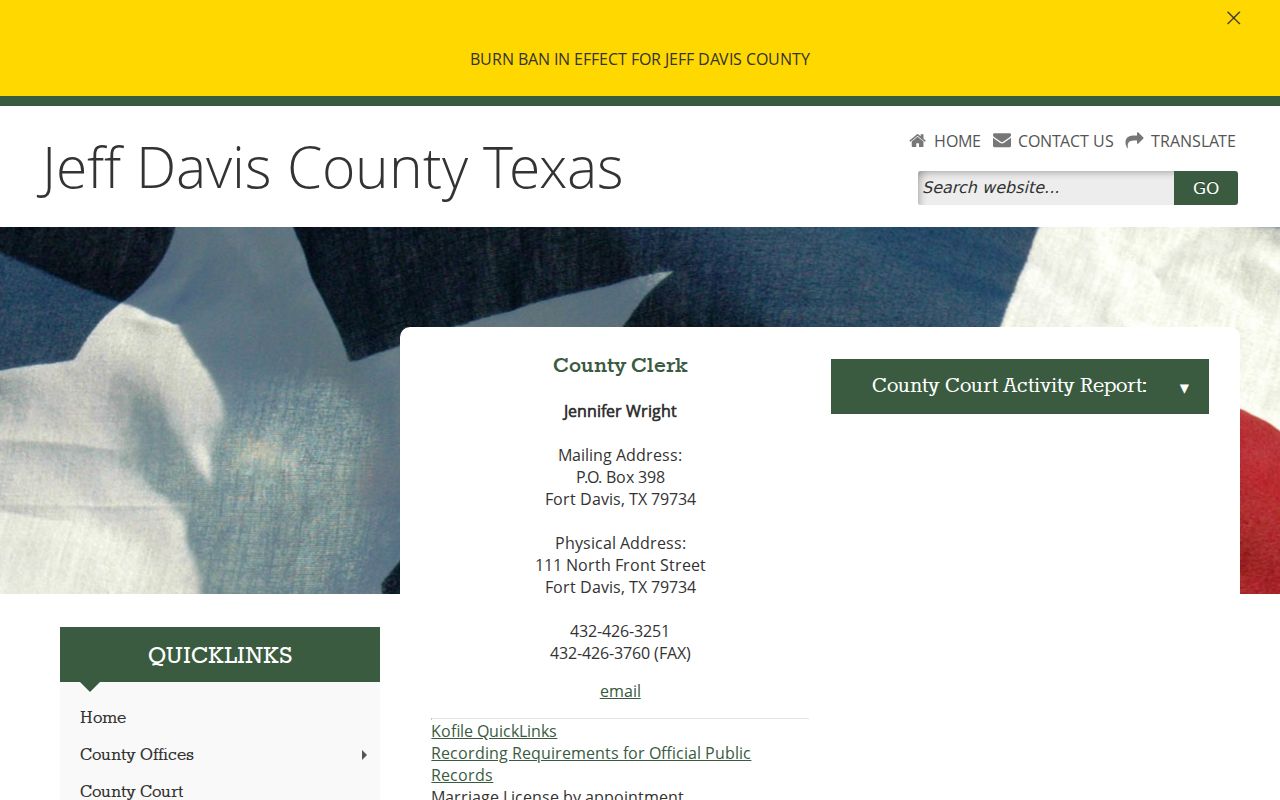
That office holds the local misdemeanor file even though Kofile QuickLinks on its page serves official-public and land records, not a represented criminal-case name search.
What the Case File Shows
A complete Jeff Davis County court file tracks what was charged and what the judge did with each count. Read it by cause number and court, then match the charging paper to later docket entries and the signed order. A docket label such as pending, set, reset, plea, trial, dismissed, or judgment describes an event or status. Only the complete file and signed disposition settle the result.
| Cause number and court | The local identifier and the district, county, or justice court responsible for the matter. |
|---|---|
| Charging document | A complaint, misdemeanor information, or felony indictment stating the accusation filed in court. |
| Docket entries | A dated register of filings, settings, motions, pleas, resets, and orders. |
| Hearings and counsel | Scheduled proceedings and attorney appearances recorded in the case. |
| Disposition and judgment | The signed outcome for each charge, such as dismissal, acquittal, deferred adjudication, or conviction. |
| Sentence and costs | The punishment, community supervision, financial entries, and other conditions imposed by the court. |
Note: A dated calendar is a scheduling record, not proof that the listed hearing occurred or that the case ended that day.
Jeff Davis County Court Search Limits
re:SearchTX is the statewide court access layer, and the Jeff Davis combined clerk uses Tyler Odyssey internally. Those facts do not guarantee that a given local criminal case or document is visible online. Registration may be required, document fees may apply, and county, case-type, historical, or document coverage can vary. Texas court administrators also direct people seeking individual trial-court records back to the court that holds them.
| Field or control | Type | Required | Use |
|---|---|---|---|
| Person or business | Text or tab | One route | Search a party name. |
| Case number | Text or tab | One route | Use the cause number when known. |
| Court or county | Filter | Optional | Select Jeff Davis County or an available court. |
| Case type | Filter | Optional | Choose criminal where available. |
| Date range | Date filters | Optional | Narrow by filing or event period. |
| Search and result controls | Buttons | As needed | Run, sort, or filter the indexed matches. |
The official re:SearchTX service provides the statewide entry point.
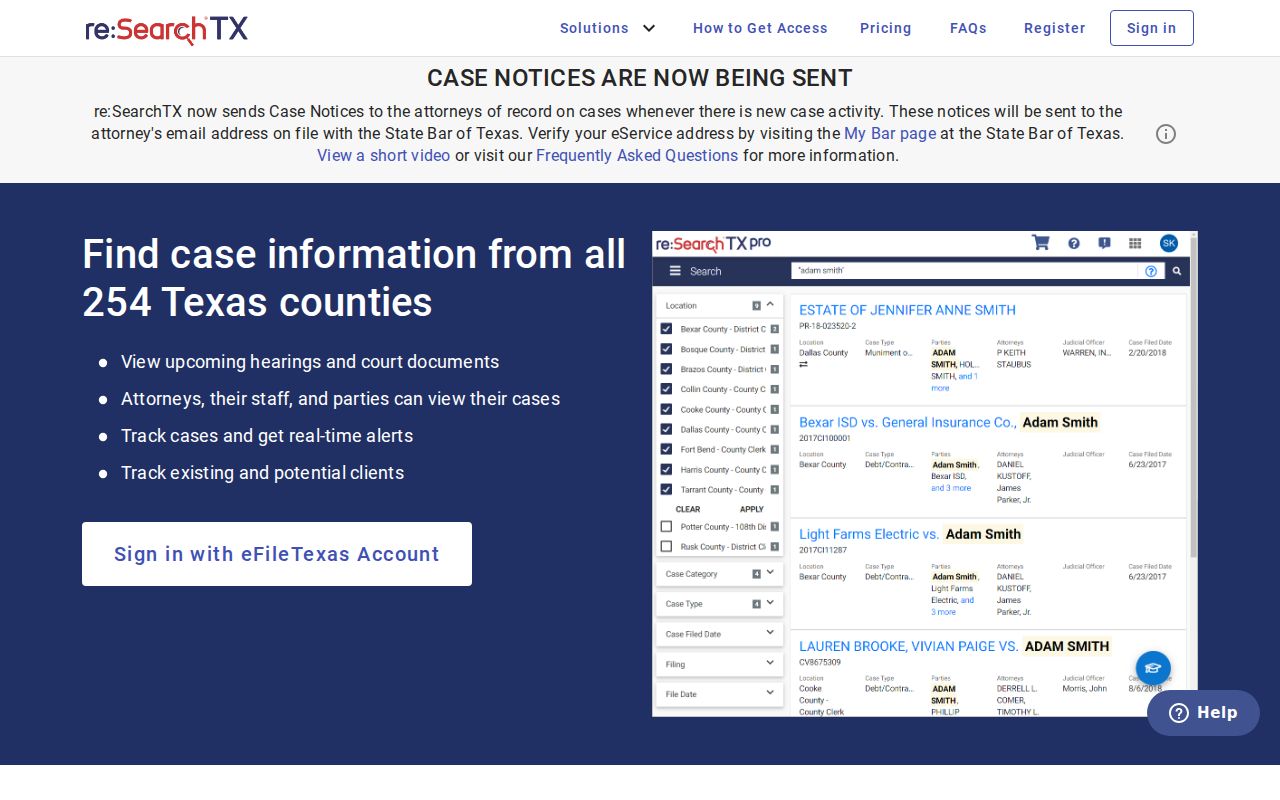
If the platform returns no Jeff Davis County case, contact the combined clerk before concluding that no case exists.
Stages of a Criminal Case
A Jeff Davis County criminal case can begin with an arrest or citation, but court-file identity begins when a complaint, information, or indictment is filed. A person held after arrest receives prompt magistration, warnings, and a bond decision. Prosecutor review then determines whether and how allegations proceed. Felony charges may go to a grand jury, while misdemeanor prosecution ordinarily uses a complaint or information. Discovery, motions, negotiation, trial, and post-judgment steps appear as docket entries and filed papers.
Case flow: Charges Filed › Arraignment › Pretrial › Plea or Trial › Disposition › Sentencing
The 394th District Court page publishes selected district settings for local felony matters.
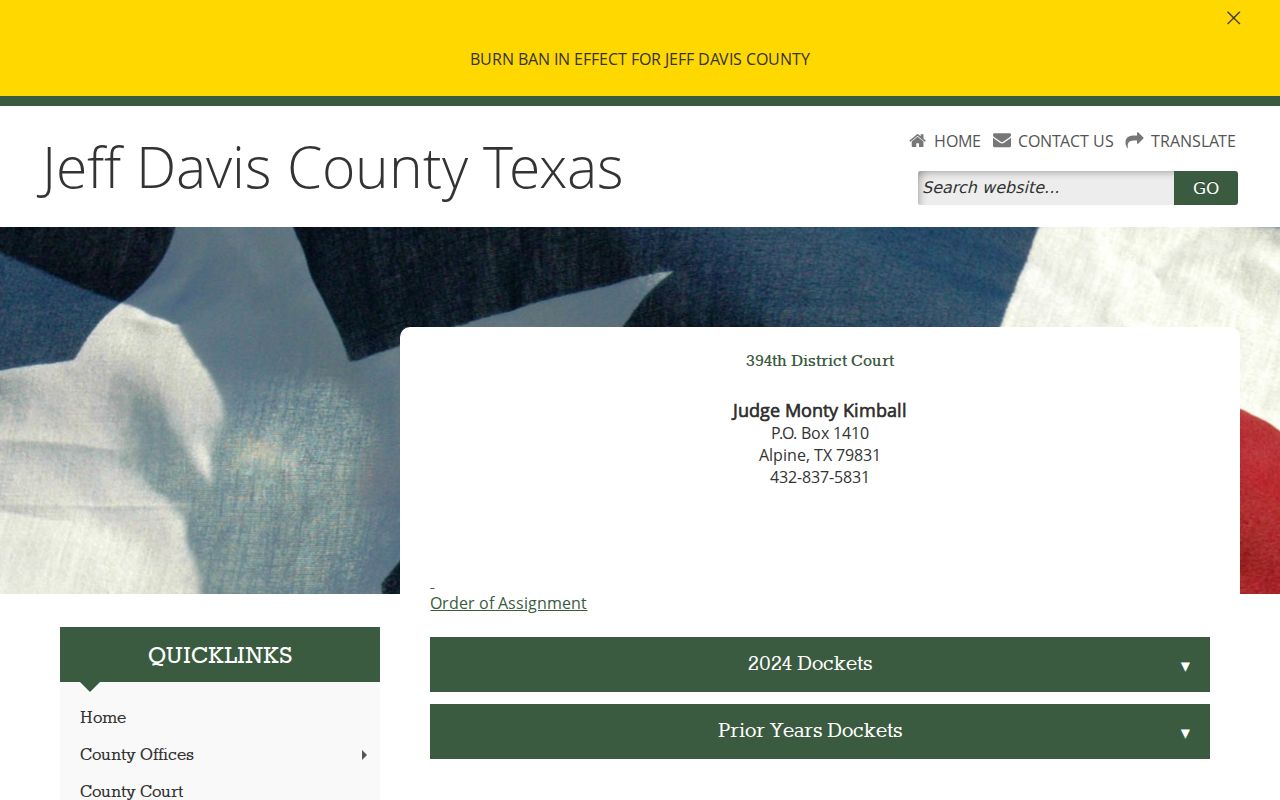
Its calendars show where a felony case is scheduled, while the combined clerk remains the custodian of its filings and final orders.
Jeff Davis County Regional Court Files
The 83rd District Attorney prosecutes felonies for the regional district, and the district judge's administrative office is in Alpine. The County Attorney handles county-level prosecutions from Fort Davis. These regional arrangements do not move Jeff Davis County records out of the local clerk's custody. A request for pleadings, orders, or a disposition should go to the combined clerk, not to the prosecutor as though it were the case-file repository.
Charge grade can change along this path. Texas places capital, first-degree, second-degree, third-degree, and state-jail felonies in District Court. Class A and B misdemeanors belong in County Court, and Class C matters ordinarily remain with the JP here. The arrest description is only the first label. The filed charge and offense of conviction may differ, so compare the booking record, charging instrument, and final judgment rather than treating them as the same fact.
Jeff Davis County Federal Court Cases
A federal arrest or prosecution does not enter the Jeff Davis County clerk file merely because the event occurred within the county. Jeff Davis County lies in the Western District of Texas and is assigned to the Pecos Division. PACER carries federal dockets and available complaints, indictments, motions, orders, judgments, and minute entries. It requires an account and uses the live federal fee schedule. Official courthouse terminals and free opinions are alternative access channels.
The official PACER service is the authoritative federal docket route.
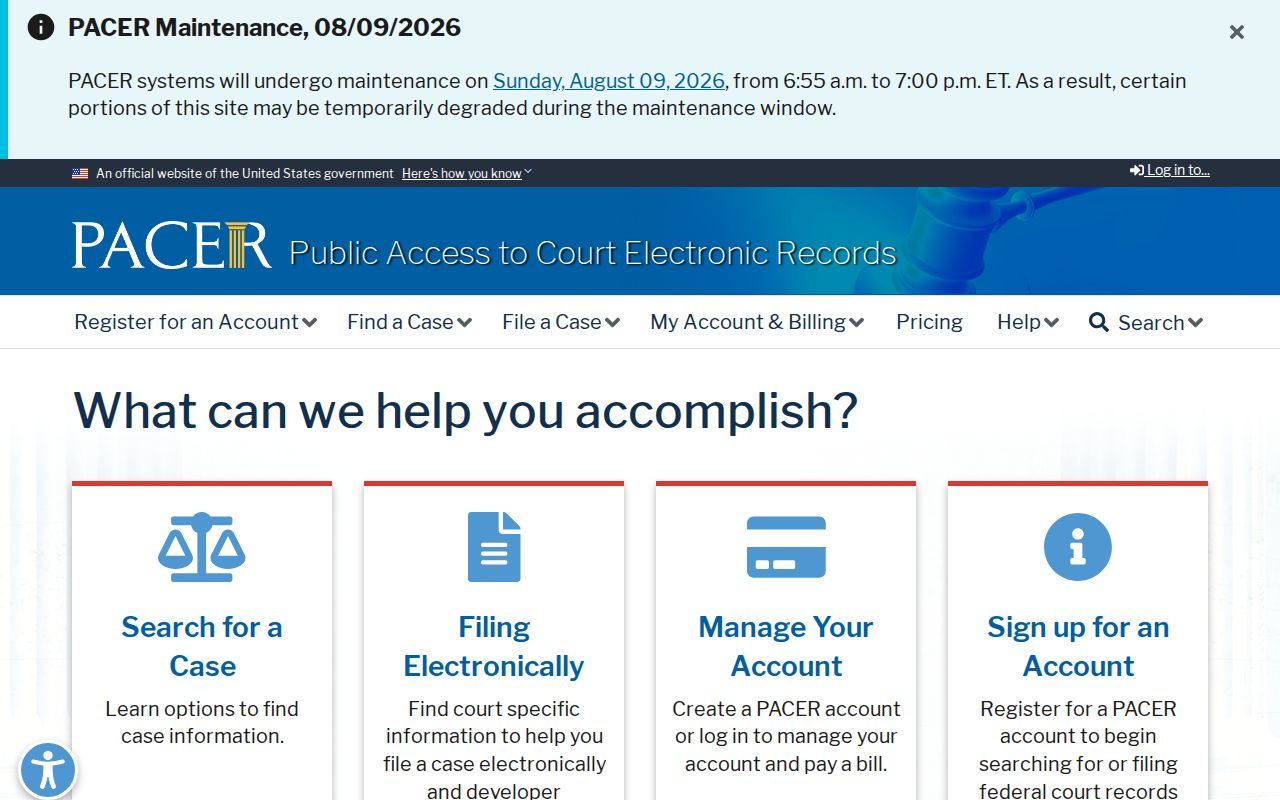
PACER should be searched separately from local District Court and County Court records because federal and Texas trial courts maintain different files.
Access & Restrictions
Texas court records begin with a strong access presumption, but not every field or document is public. Juvenile material, sealed files, expunged records, protected victim information, confidential identifiers, and nonpublic grand-jury material can be withheld or redacted. An order of nondisclosure limits public dissemination of qualifying criminal-history information but is not the same as expunction. A public online view may also omit attachments that remain available through the clerk.
Texas access framework: Government Code Chapter 552 governs executive-branch public information, while judicial records principally follow Texas court-access rules. Government Code Chapter 411 limits criminal-history dissemination, and Code of Criminal Procedure Chapter 55A governs expunction.
When a case does not appear, ask the clerk whether the issue is coverage, archive status, spelling, court division, restricted access, or a sealed record. For a missing DPS disposition, obtain a clerk-certified disposition. DPS says an ordinary photocopy is not enough unless it bears the issuing court's embossed seal. The certified local court result can then support an error-resolution request to the state repository.
Note: Redaction removes protected fields from a releasable copy, while sealing or expunction changes whether the underlying record may be disclosed.