
Running a Sex Offender Check in Jeff Davis County
Start with the Texas Department of Public Safety public registry. It is the official statewide source for public registration data, and it supports name and geographic searches. Jeff Davis County does not publish a separate local registry page, list, appointment calendar, or sheriff app. That makes the state system the main public search layer. The Jeff Davis County Sheriff remains the direct local channel for rural areas and places without a municipal registration authority. Call the office at 432-426-3213 when a location, reporting status, or possible omission needs confirmation.
Prepare more than a name. An address, city, ZIP code, alias, and physical descriptors can help separate people with similar names. A map result is a lead, not a final judgment. DPS says local authorities supply the data, so a recent move or status change may not appear at once. A sound Jeff Davis County sex offender check compares the profile with current state results and, when needed, asks the sheriff to verify the local record.
Jeff Davis County DPS Registry Searches
The official Texas registry search is the first stop for a Jeff Davis County address or name. The captured search view below shows the government interface assigned to this registry page.
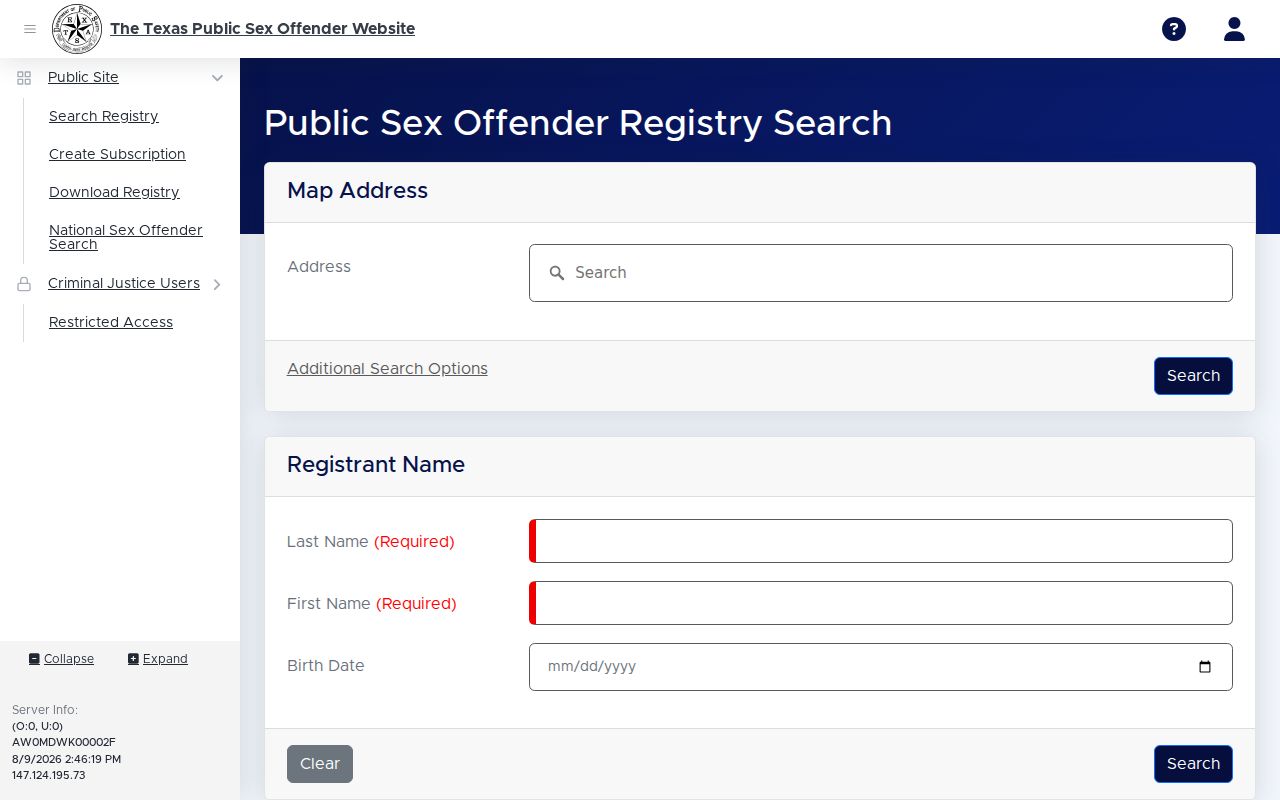
This interface keeps the check at the state source, while the sheriff provides the local verification layer. DPS also publishes a separate registry landing and map view. The Texas registry map interface helps a reader shift from a person search to community awareness around a place.
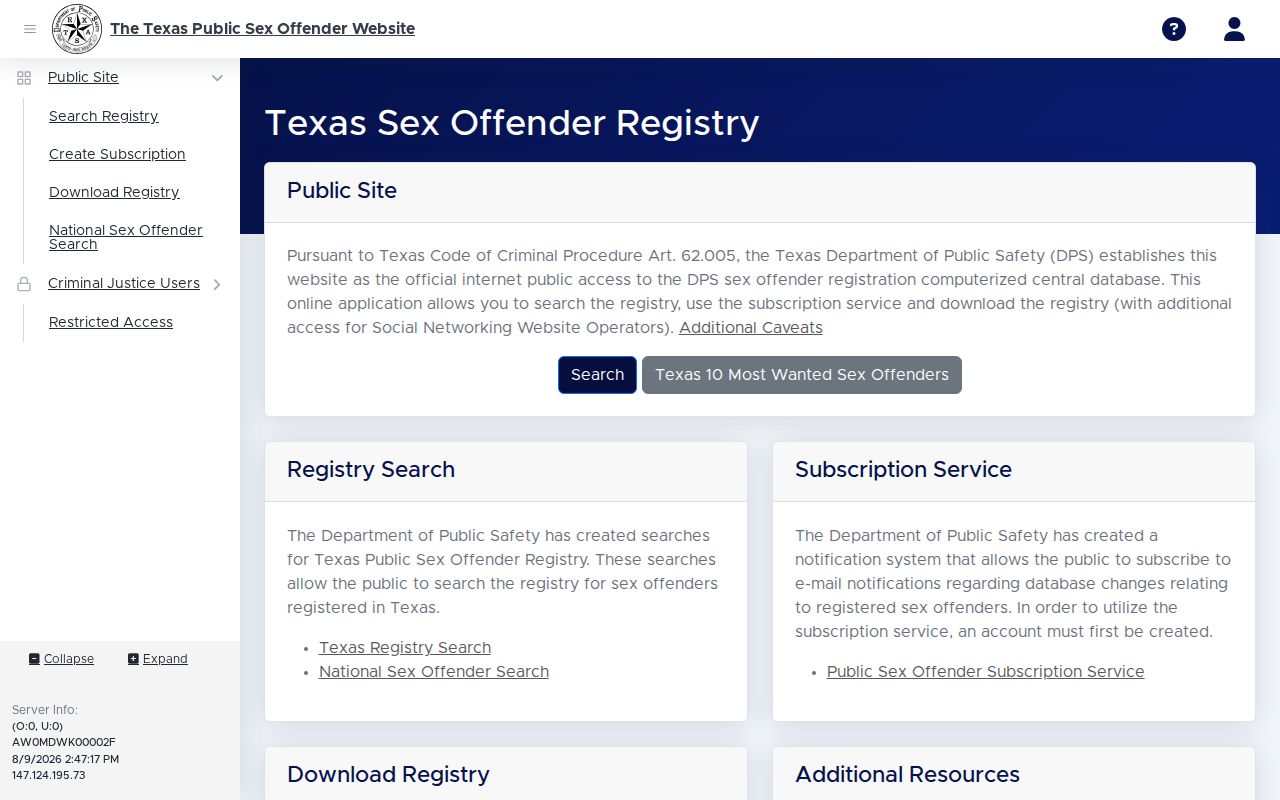
The map is useful in a large rural county, but it does not replace profile review or direct confirmation of a questionable record.
Searching the Texas Public Sex Offender Registry
DPS runs the Texas Public Sex Offender Registry under Code of Criminal Procedure Chapter 62. The current official entry point is the DPS registry portal. Search controls can change, and the research could not reliably verify live radius choices, so no fixed mileage option is promised. Use the choices the live portal displays.
- Open the official registry and read its conditions of use.
- Choose a name search or a geographic route such as address, city, ZIP, or county.
- Review map or list results and compare more than one identifier.
- Open the profile, read the offense, status, address, and risk details, then verify doubts with DPS or the sheriff.
| Field Label | Type | Required | Notes |
|---|---|---|---|
| Name | Text | For name route | Compare aliases and identity fields in the returned profile. |
| Address or location | Text/map | For place route | Use the live geographic controls shown by DPS. |
| City or ZIP | Text/select | Optional route | Narrows community results without claiming a fixed radius. |
| County | Select/filter | Optional route | Choose Jeff Davis County when that filter is available. |
| Map, route, or proximity | Map/app | Optional | DPS documents these choices in its mobile app; confirm current settings. |
The current DPS portal capture below helps readers recognize the state-operated entry point. It does not preserve any private profile or guarantee that controls will stay in the same place.
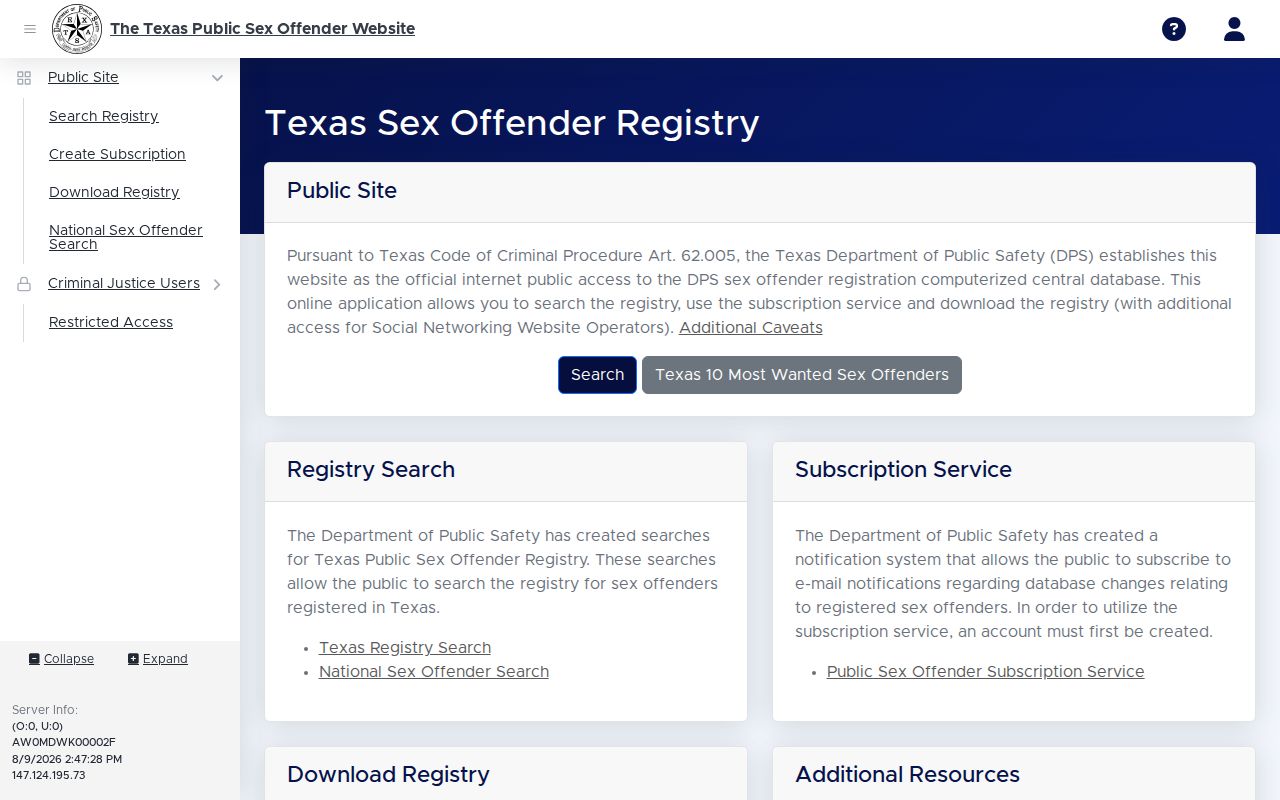
Use the live labels shown there, and avoid treating an empty result as proof that no registration record exists.
What a Registry Profile Shows
A Texas public profile can combine identity descriptors, registration facts, and offense information. These fields help distinguish a real match from a similar name. They do not expose every item held by DPS or the local authority. Protected details include Social Security and driver-license numbers, phone numbers, online identifiers, employer contacts, victim identity, DPS-only additions, and juvenile data ordered nonpublic. Fingerprints are collected for official use but are not displayed as public profile images.
| Name & Aliases | Full name and reported aliases used to narrow identity. |
|---|---|
| Photo & Physical Description | Recent color image plus sex, race, height, weight, eye and hair color, and shoe size where published. |
| Registered Address | Residence address or a geographic description when the statute calls for one. |
| Offense & Case Facts | Qualifying offense, victim age category without identity, conviction date, punishment, and supervision or discharge status. |
| Risk Level | Texas Level 1, 2, or 3 assessment, which is not a federal registration-duration tier. |
| Registration Status | Registration authority and status, plus certain higher-education and vehicle information when public. |
The DPS criminal history and registry FAQ gives official context for public fields and program limits.
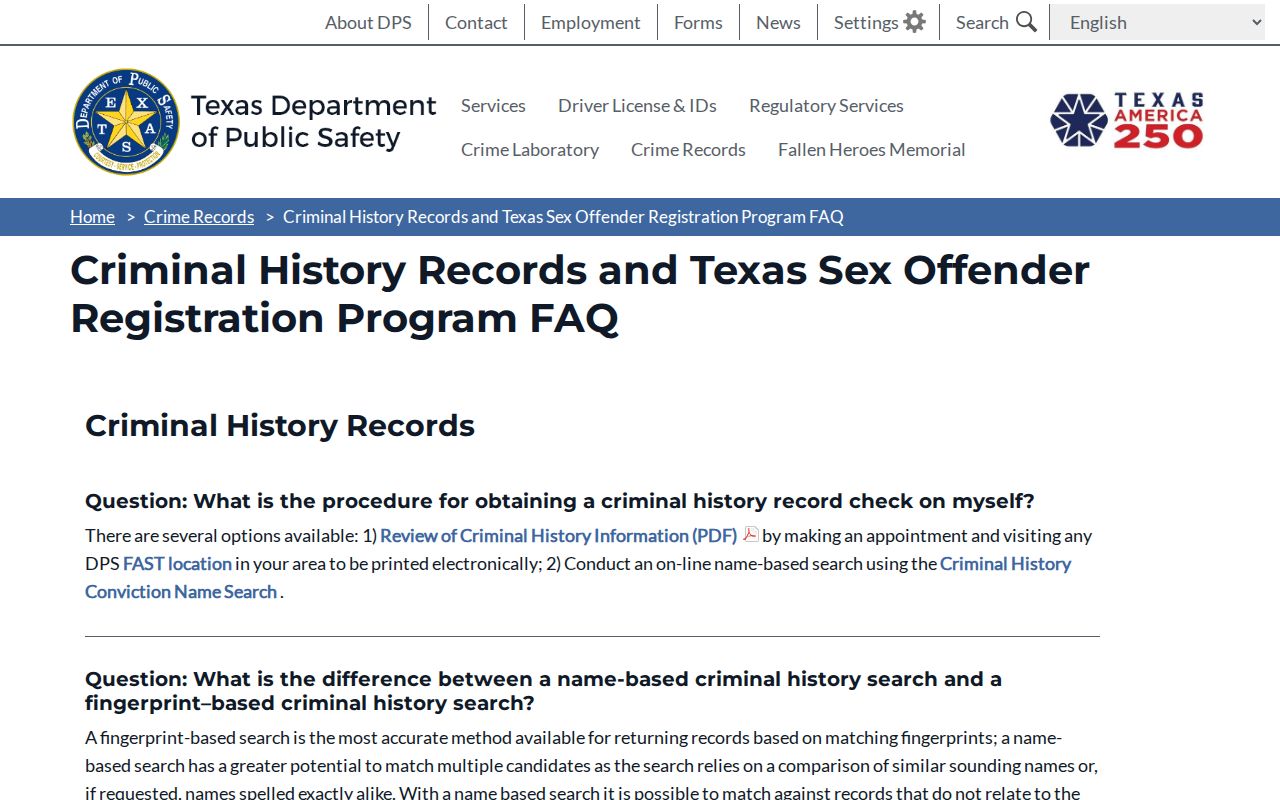
That agency explanation is the right place to check when a public field or status label is unclear.
Jeff Davis Registry Verification Cycles
Verification frequency is not one rule for all registrants. It is generally annual, within the window 30 days before or after a birthday. Two or more sexually violent convictions or deferred orders can require verification at least every 90 days. A person without a fixed address reports a location at least every 30 days, while specified civilly committed people follow special rules. Registration after arrival is generally due by the later of the seventh day or the first date local policy permits, and changes require prompt reporting.
These cycles help explain why a Jeff Davis County registry record can have several dates. The public should not infer noncompliance merely because one field looks old. Confirm the meaning with the sheriff or DPS. The Texas Sex Offender Registration Program page explains the state framework and notification channels.
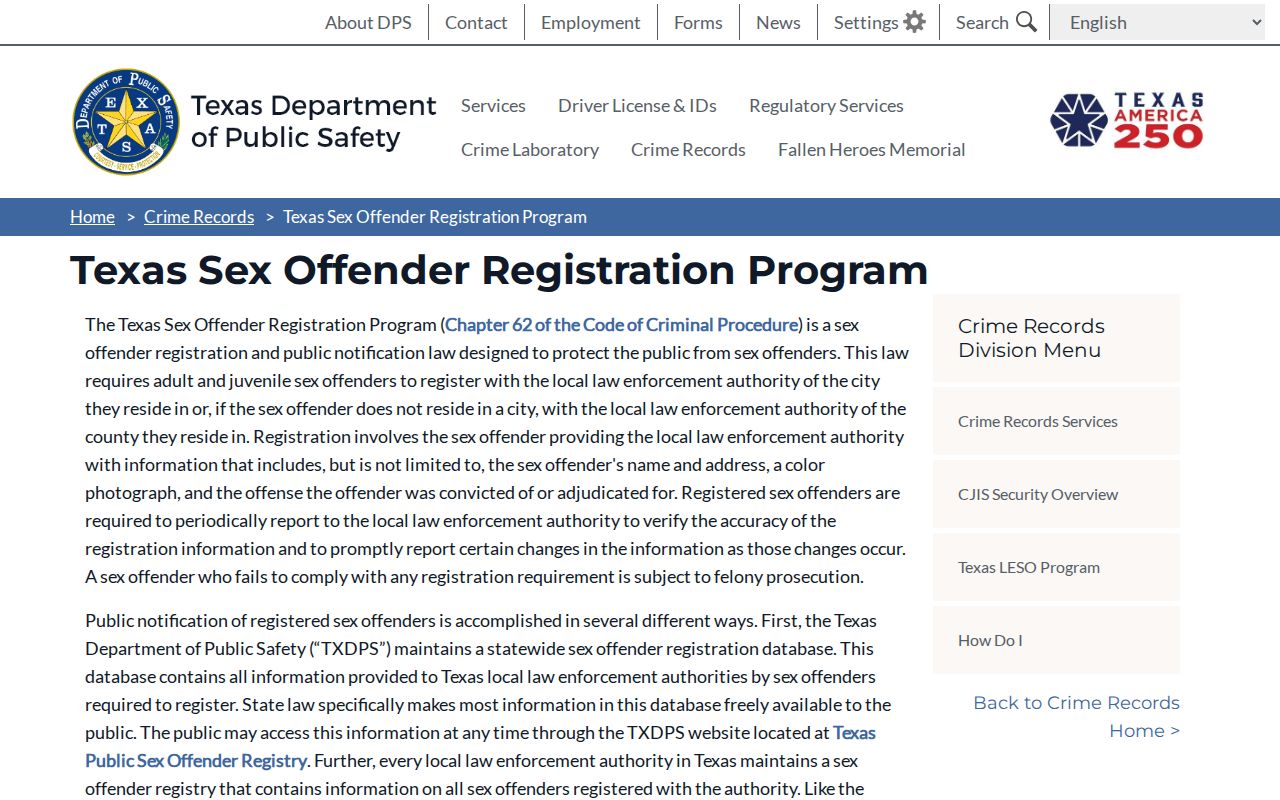
The program source ties a Jeff Davis County check to official reporting duties instead of assumptions based on a search result alone.
Registration Requirements and Levels in Texas
Texas risk levels describe assessed danger and likelihood of continued sexual conduct. They do not set the registration term by themselves. Duration comes from the qualifying offense and Article 62.101. Certain sexually violent and other listed offenses generally require lifetime registration. Other specified cases generally end on the tenth anniversary measured from the controlling disposition, release, discharge, or dismissal event. Article 62.402 can allow early termination in a qualifying case after assessment and judicial review.
| Texas Risk Level | Official Meaning | Duration Effect |
|---|---|---|
| Level 1, low | Low danger and not likely to continue criminal sexual conduct. | None by itself; use the offense-based statute. |
| Level 2, moderate | Moderate danger and may continue criminal sexual conduct. | None by itself; use the offense-based statute. |
| Level 3, high | Serious danger and expected to continue criminal sexual conduct. | None by itself; it affects community notification. |
Do not relabel these risk findings as federal SORNA tiers or attach a 10-year, 25-year, or life term from the level alone. Read the offense chart and current Chapter 62 text. That distinction prevents a common error in Jeff Davis County registry checks.
Jeff Davis Registry Notices and Radius
For a high-risk registrant or civilly committed sexually violent predator moving into a community, DPS sends bilingual postcards to addresses in a defined area. The research documents a one-mile area in an unsubdivided setting or three blocks in a subdivided setting. Local authorities may also publish a high-risk notice, and specified schools receive notice. Those notification distances are not a statewide rule that bars every registrant from living near a school or playground.
Texas Chapter 62 has no blanket statewide school or playground residency radius. A supervision condition or valid local ordinance may impose a separate limit, but no Jeff Davis County-wide ordinance was located in the official research. Readers should keep notification, residency, supervision, and registration duties separate. Each answers a different question.
Lawful Use and Community Notification
Registry information supports personal safety, family planning, and community awareness. It is not a license to contact, follow, shame, threaten, or harm a registrant or household. Data can lag because local authorities supply it, so verify a match with the sheriff or DPS before acting on it. Report suspected failure to register to the proper local authority. Chapter 62 makes failure to comply a felony in qualifying circumstances, but enforcement belongs to law enforcement.
Misuse is a crime: The Texas DPS registry warns against using its information to injure, harass, or commit a crime against a registrant or family. Such conduct may violate Texas Code of Criminal Procedure Chapter 62 and other criminal laws.
Jeff Davis Cross-State Registry Checks
Jeff Davis County sits in a region where a person may have lived or registered in more than one state. The National Sex Offender Public Website searches participating jurisdictions through a federal gateway. Use it when a Texas-only name or address search is too narrow.
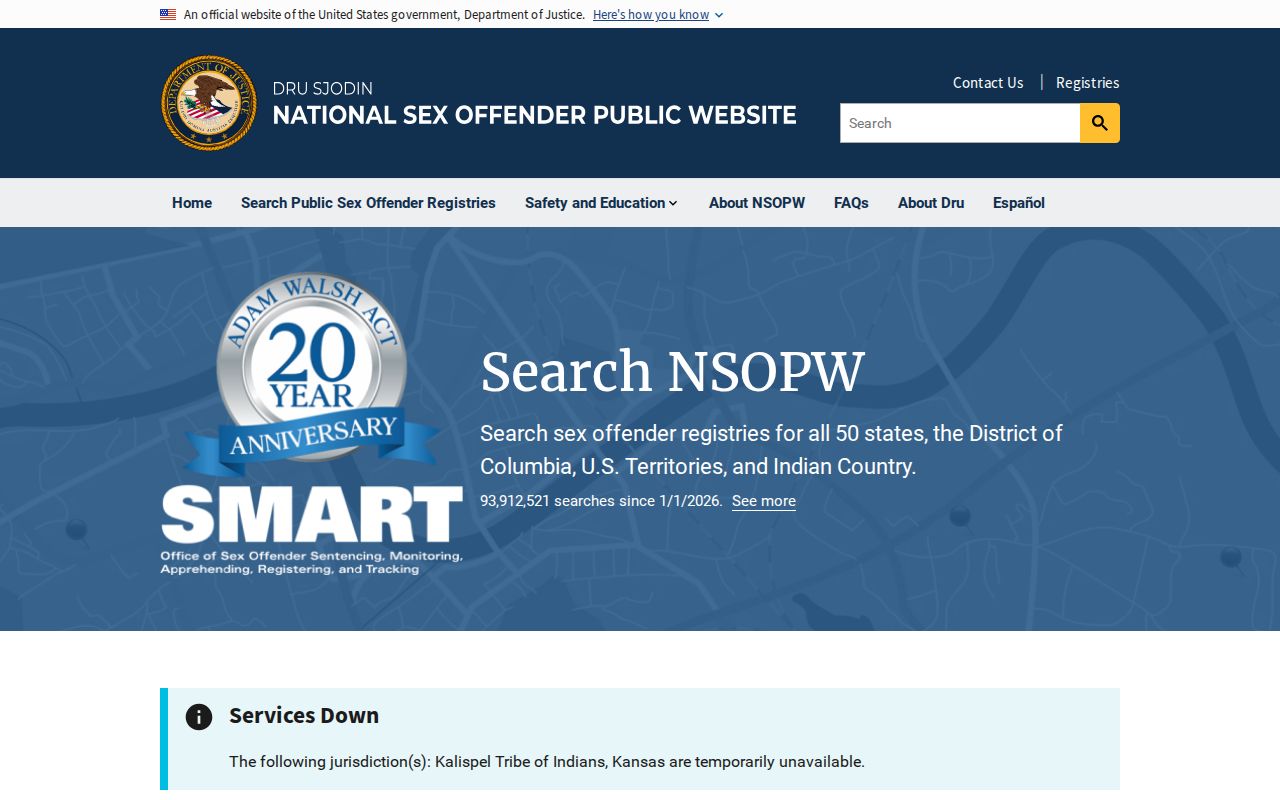
NSOPW adds reach, not a new local record. Return to the originating jurisdiction or the Jeff Davis County Sheriff to verify a result and current reporting authority.